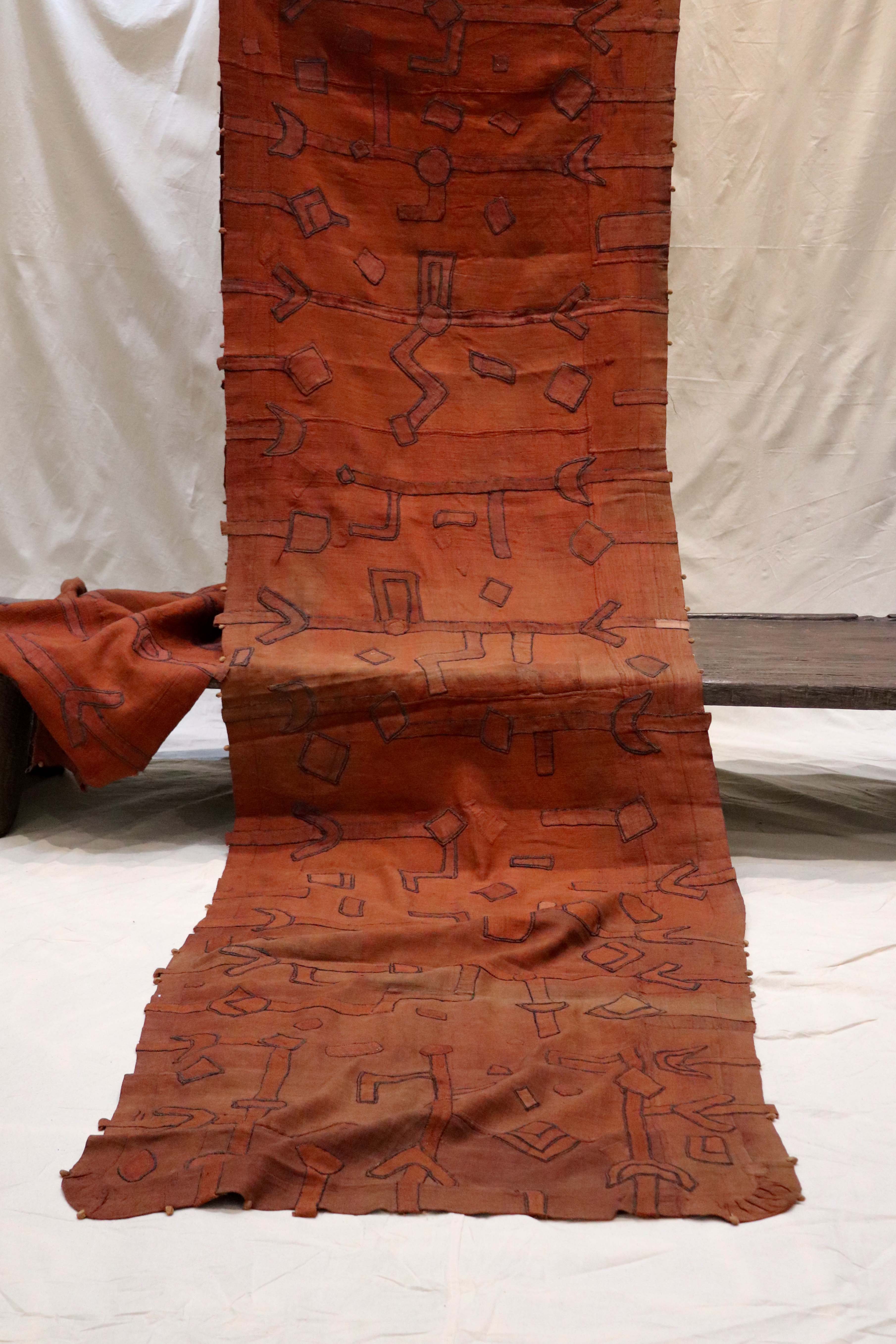
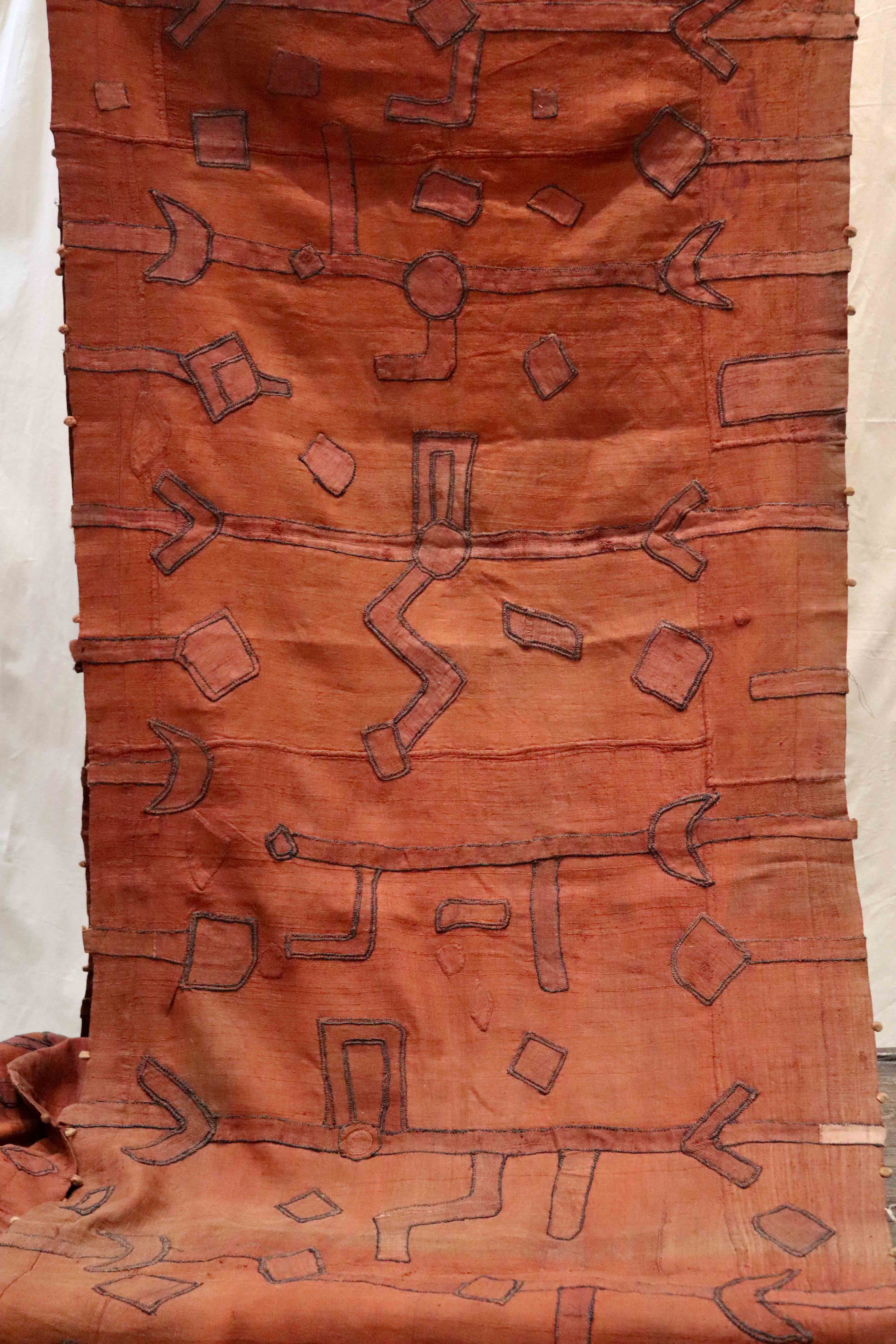
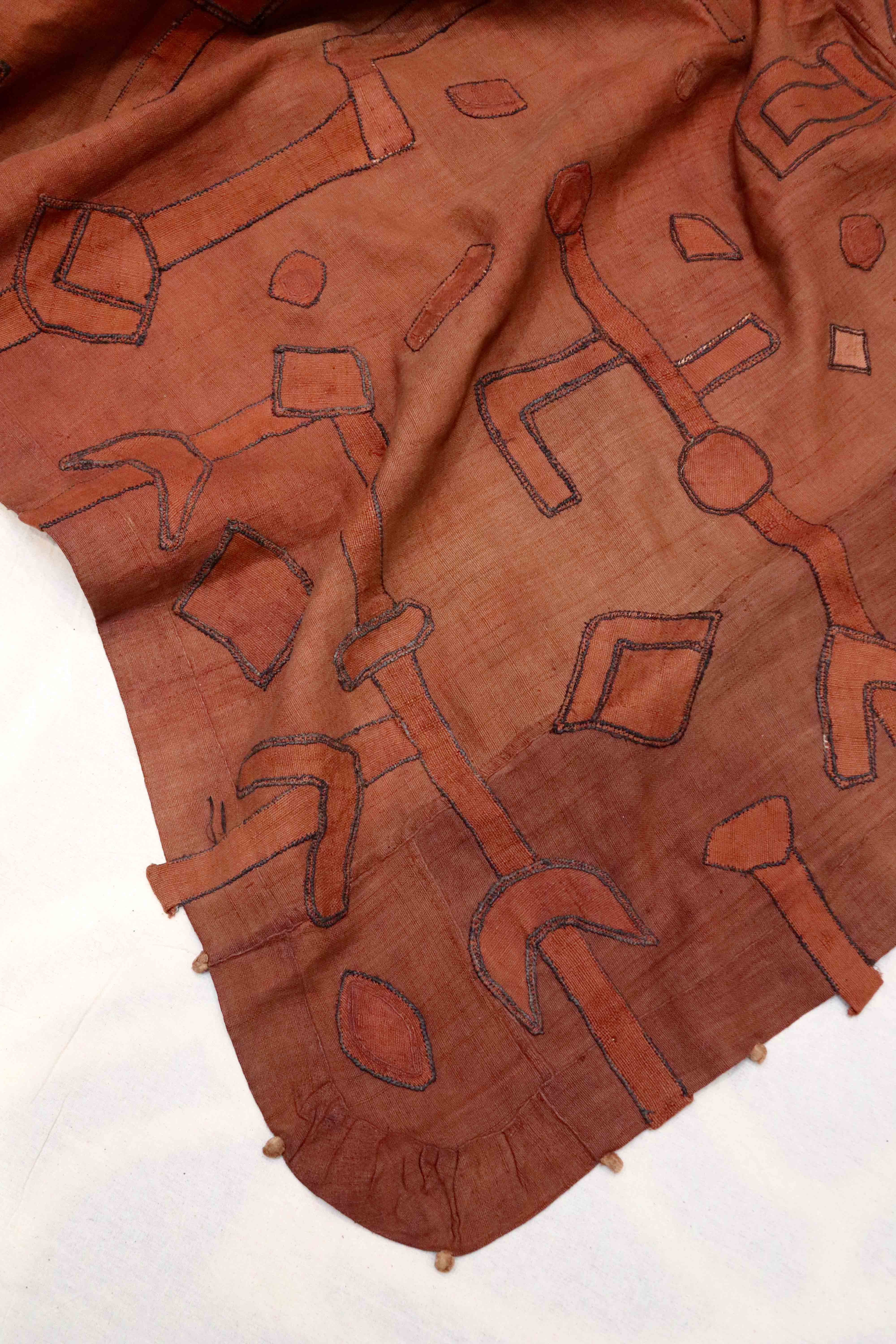
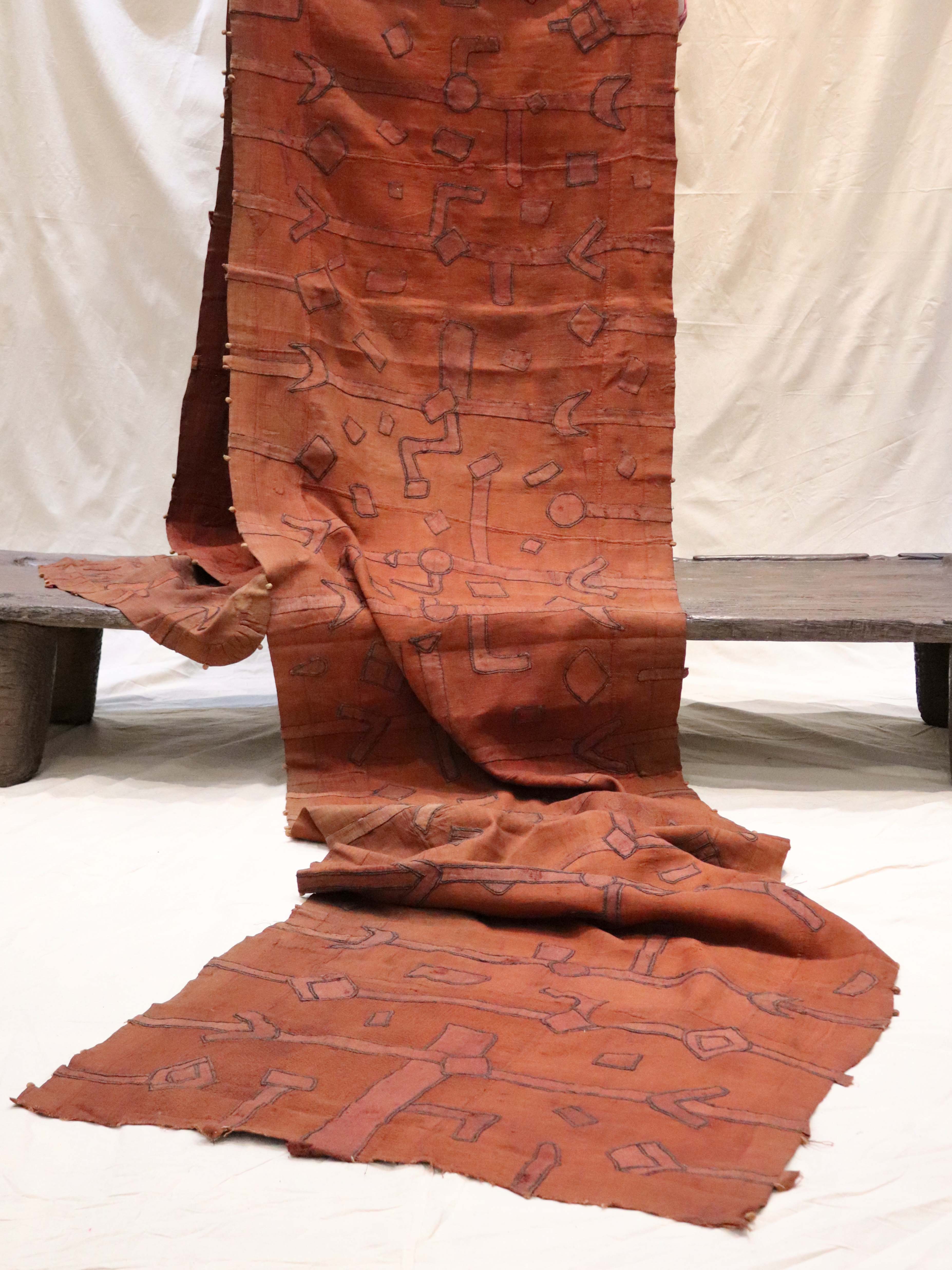
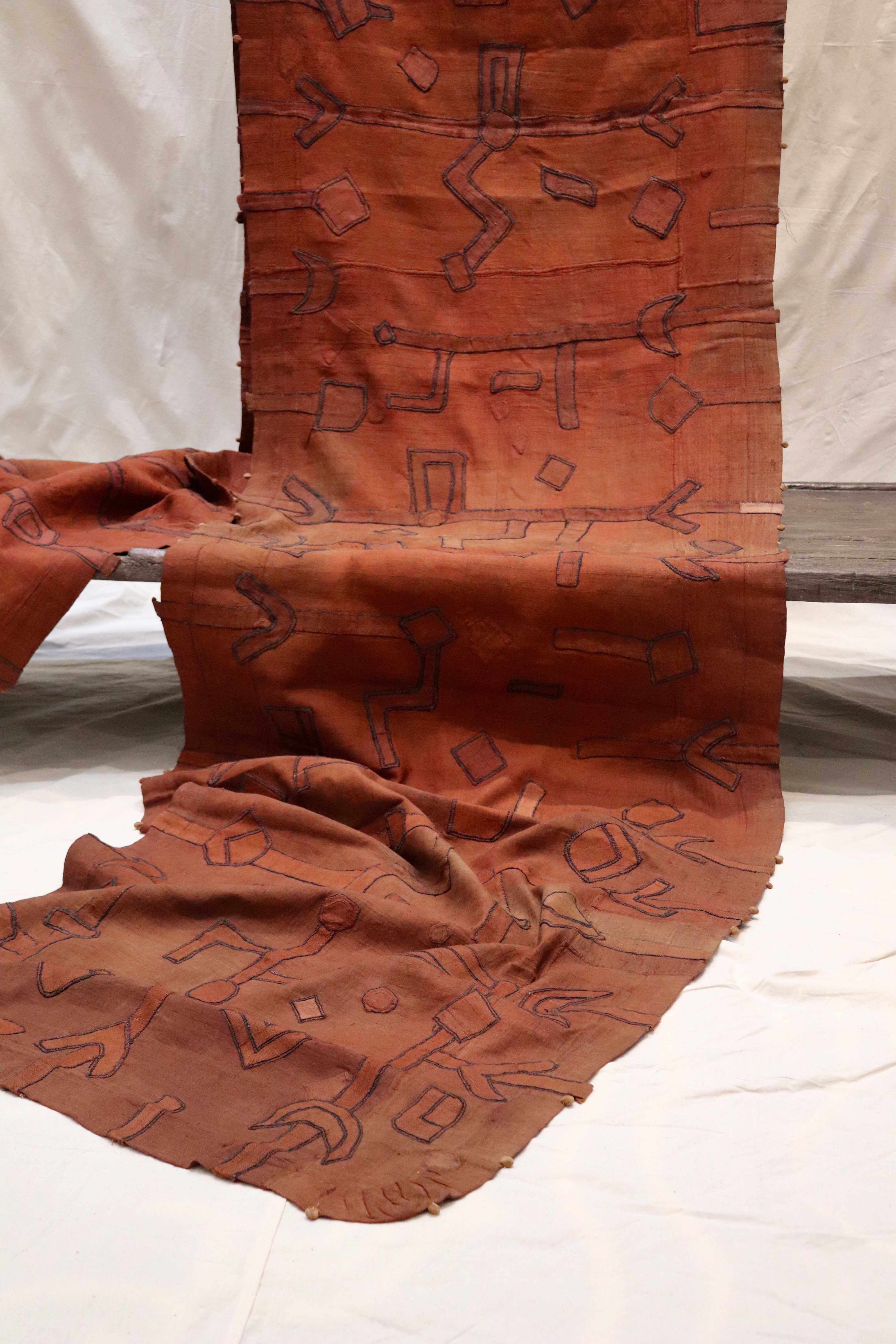
Textiles hold significant cultural value for the Kuba people, with nearly all adult members of society engaged in cloth production. Raffia fibers, sourced from the leaves of the raffia palm tree, are stripped into narrow strips, woven into fabric by Kuba men, and then beaten with a pounder to soften the material. Women take on the detailed work of embroidery, patchwork, edgings, and possibly tie-dyeing.
The finished cloths are worn as overskirts, called ntshack when worn by women and mapel when worn by men. These garments are draped around the waist over a longer underskirt and secured with a belt. They are typically worn during important ceremonies and dances. At funerals, raffia cloths carry a profound significance as they symbolize security and continuity, connecting the living with each other and with the deceased. Chiefs may also commission these cloths for specific ceremonial purposes, and the most skilled weavers may be employed for up to a year to produce these elaborate textiles.
Textiles hold significant cultural value for the Kuba people, with nearly all adult members of society engaged in cloth production. Raffia fibers, sourced from the leaves of the raffia palm tree, are stripped into narrow strips, woven into fabric by Kuba men, and then beaten with a pounder to soften the material. Women take on the detailed work of embroidery, patchwork, edgings, and possibly tie-dyeing.
The finished cloths are worn as overskirts, called ntshack when worn by women and mapel when worn by men. These garments are draped around the waist over a longer underskirt and secured with a belt. They are typically worn during important ceremonies and dances. At funerals, raffia cloths carry a profound significance as they symbolize security and continuity, connecting the living with each other and with the deceased. Chiefs may also commission these cloths for specific ceremonial purposes, and the most skilled weavers may be employed for up to a year to produce these elaborate textiles.
|
600 L x 80 W cm |